PriceSpy UK

How to choose the right padel racket

Author profile avatar

Prisjakt

Redaktionen

Updated: 20 May 2026

Padel is a very popular racket sport alongside tennis and squash. To ensure you have the best possible experience, it is important to choose a padel racket that suits your style of play. Here are tips on how to choose the right racket for the right player.

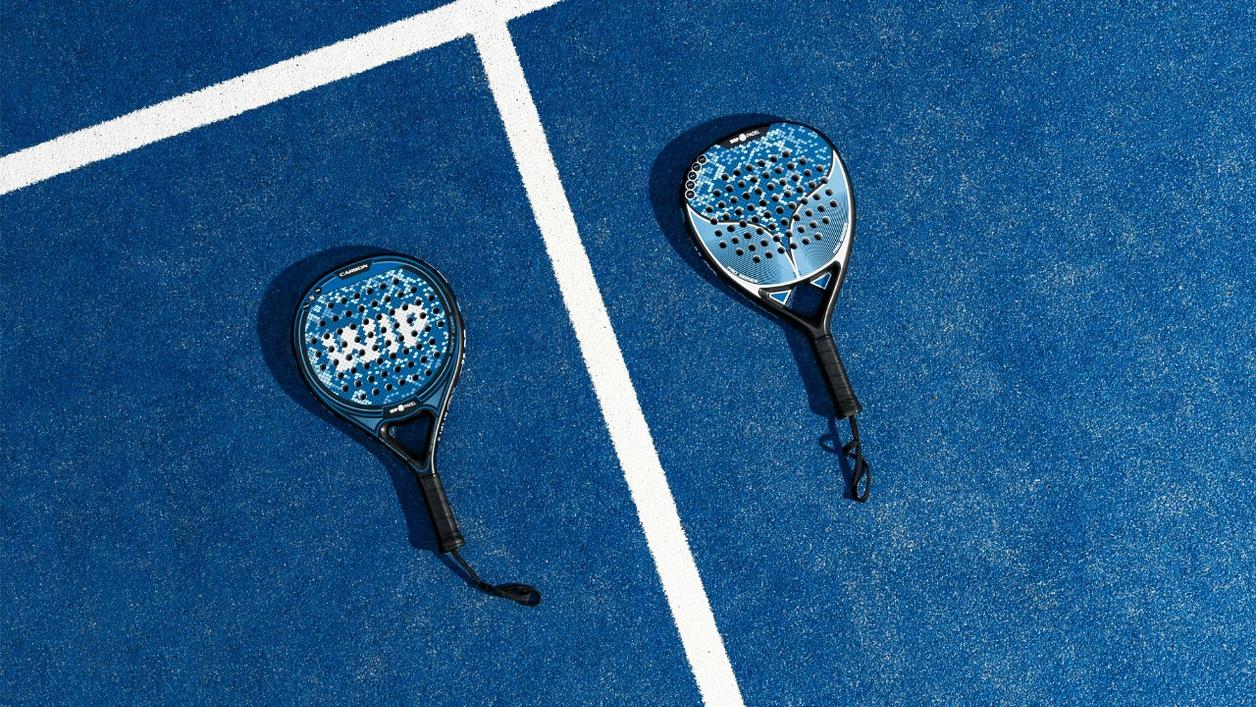
A padel racket is used for padel, a sport that can be described as a mix of tennis and squash. Padel rackets do not use strings like tennis or squash rackets but are made from a composite material with small holes in the hitting surface. The size is slightly smaller than a tennis racket in circumference, but padel rackets are considerably thicker at the hitting surface.

Image: Photo: Unsplash, Vincenzo Morelli

Types of player

Padel rackets are designed for different player types and there are many features to keep track of. If you do not want to delve into the subject you can look for store labels that indicate which player type each racket is suited for. Players are often divided into three categories:

  • Beginner: You have never held a padel racket before or only play occasionally. There are entry-level models to help you get started as easily as possible without the racket costing too much.
  • Regular player: Padel is not new to you and you know your playing style. Your demands on a padel racket increase and you know what you need.
  • Advanced or professional player: You train regularly, have high demands on your padel racket and are aware of what you need to play at your best.

If you have never held a padel racket it is good if you can borrow one when you play the first few times. In many cases you can rent a padel racket at clubs or padel centres.

Hardness

The outer material of padel rackets varies in hardness depending on the intended player type. Models with a carbon fibre exterior are harder and work best when you want good control over the ball. Fibreglass is more elastic and provides more power.

The inner material, the so-called core, also affects how the ball reacts when it hits the racket. The most common inner material is a rubber called EVA. It is firm and helps you control the ball. Another material is foam, which is less popular but increases speed on, for example, volley shots.

Softer padel rackets:

  • More power behind shots
  • Less control over the ball
  • Suited for play further from the net
  • Have lower durability than hard rackets

Harder padel rackets:

  • More control over the ball
  • Require a more technical game
  • Have higher durability than soft rackets

Image: Photo: Unsplash, Sergio Contreras

Balance

The balance of your padel racket is important because it affects both how the ball reacts when it hits the racket and how much strain is placed on your wrist. Balance refers to where the balance point is on the racket head.

There are mainly three types of balance: high balance, centred balance and low balance.

  • High balance means the centre of gravity is located away from the handle. With weight positioned far from the handle you get a head-heavy racket with extra power in the shots. It also means you get less control over the ball and increased strain on the wrists. Padel rackets with a high balance are often diamond-shaped.
  • Centred balance means the centre of gravity is in the middle of the racket. This gives good control over the ball without the wrists being strained as much as with a head-heavy racket. Padel rackets with a centred balance are often drop-shaped or round.
  • Low balance means the centre of gravity is close to the handle for extra good control and minimal strain on the wrists. Padel rackets with low balance are not suited for hard shots but are easier for new players to handle. Low balance rackets are often round-shaped.

Shape

There are three different shapes of padel rackets: diamond-shaped, round and teardrop. The shapes are tailored for different playing styles and although they look similar the differences for players are significant. If you are unsure choose a round racket as they are considered easier to play with than diamond or teardrop shapes.

  • Round have a hitting surface low down, which increases precision and control. A good choice for players who play defensively and like to put spin on the ball. The best choice for beginners.
  • Diamond-shaped have the hitting surface high up, which gives more power when you strike the ball. Good for players who prefer fast shots and do not use much spin.
  • Teardrop have the hitting surface in the middle of the racket, offering a balance between power and control.

Image: Photo: Unsplash, Vincenzo Morelli

Weight

Weight greatly affects how you experience your padel racket. Heavy rackets are harder to handle and increase strain on your wrists. More weight provides greater power behind shots but makes it harder to react to fast balls. Lighter rackets help you play faster and more dynamically.

It is important to try several padel rackets with different weights to see what suits you best. Starting weights you can consider are around 360 to 365 grams for men and 340 to 350 grams for women . Children should start with weights around 280 to 340 grams .

Do not be fooled that the difference between models is sometimes only a few grams. It makes a big difference when you play. Consider choosing a lighter padel racket if you are prone to tennis elbow, also known as mouse arm.

Thickness

Thickness is normally 36 or 38 millimetres. Thinner padel rackets are generally easier to swing and suit beginners. Thicker models provide more power behind shots. The standard thickness is 38 millimetres and it is not something you usually need to factor in when choosing your racket. Models thicker than 38 millimetres are not approved for competition play.

Durability

It is unavoidable to hit walls and floors. A frame protector around the edge of the padel racket increases durability and keeps your racket looking good longer. Some padel rackets have built-in frame protection of metal or plastic, and sometimes a protector is supplied that you must attach yourself. In most cases you must buy a frame protector yourself. It is a cheap investment that protects your racket.

How to choose the right padel racket