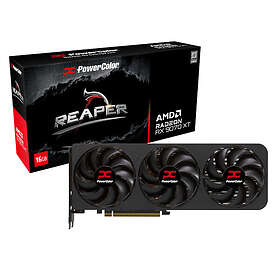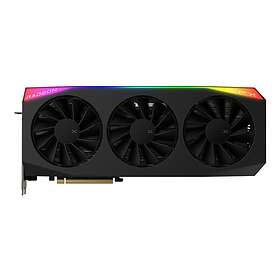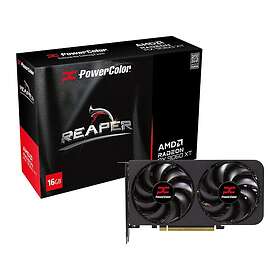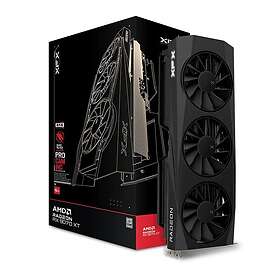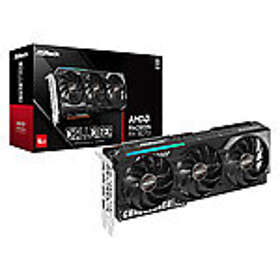
Best Graphics Cards October 2026
Compare the top graphics cards to find the right balance of gaming performance, video memory, and power requirements for your PC build. Our independently ranked selection highlights the standout features and trade-offs of each model. Explore the options below to choose the card that best matches your monitor setup and gaming goals.
Last updated: 6 October 2026

Graphics Cards: Top 5
1
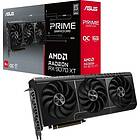
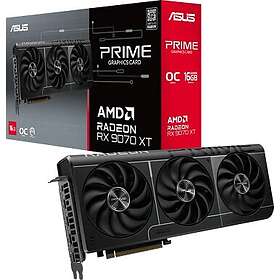
Asus Radeon RX 9070 XT Prime OC 16GB
from £758.9910 stores
from £758.99
10 stores
2
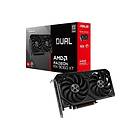
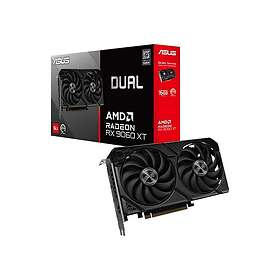
Asus Radeon RX 9060 XT Dual 16GB
from £533.987 stores
from £533.98
7 stores
3
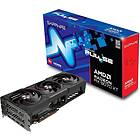
Sapphire Radeon RX 9070 XT Pulse 16GB
from £799.996 stores
from £799.99
6 stores
4
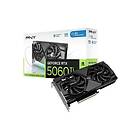
PNY GeForce RTX 5060 Dual Fan OC 8GB
from £429.983 stores
from £429.98
3 stores
5
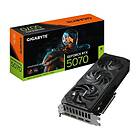
Gigabyte GeForce RTX 5070 WINDFORCE OC SFF 12GB
from £794.954 stores
from £794.95
4 stores
The Asus Radeon RX 9070 XT Prime OC delivers strong 1440p and 4K gaming performance with 16GB of GDDR6 memory and a boost clock reaching 3,010 MHz. It features modern PCIe 5.0 connectivity, DisplayPort 2.1a outputs, and efficient triple-fan air cooling. Its 2.5-slot profile requires a spacious PC case and a 750 W power supply.



Pros
16GB GDDR6 memory on a 256-bit bus
High 3,010 MHz boost clock
DisplayPort 2.1a and HDMI 2.1b support
Supports up to 4 monitors
Cons
Large 312 mm length takes 2.5 slots
Requires a 750 W power supply
Lacks Nvidia CUDA acceleration
The Asus Radeon RX 9060 XT Dual offers 16GB of video memory in a compact 202 mm dual-slot format designed for smaller cases. It operates with a fast 3,250 MHz boost clock while maintaining a modest 500 W power supply requirement. Its semi-passive fans keep the system quiet during light desktop tasks.


Pros
Generous 16GB GDDR6 memory
Compact 202 mm length fits small cases
Modest 500 W power supply requirement
Semi-passive dual-fan cooling
Cons
128-bit memory bus limits bandwidth
Supports maximum of 3 monitors
Lacks Nvidia CUDA support
The Sapphire Radeon RX 9070 XT Pulse is a high-performance graphics card built for demanding 1440p and 4K gaming rigs. It pairs 16GB of GDDR6 memory with a robust triple-slot cooler and dual HDMI 2.1 outputs for versatile multi-monitor configurations. Its 320 mm length requires careful case measurement and a 750 W power supply.
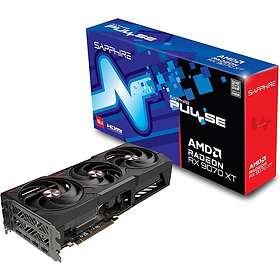

Pros
16GB GDDR6 memory on a 256-bit bus
Dual HDMI 2.1 and dual DisplayPort 2.1
Built-in FreeSync and AI acceleration
Supports 4 simultaneous monitors
Cons
Thick 3-slot design needs extra room
320 mm card length requires large case
Requires a 750 W power supply
The PNY GeForce RTX 5060 Dual Fan OC utilizes next-generation GDDR7 memory to deliver rapid 28 Gbit/s data rates for mainstream gaming and machine learning. Its dual-slot design measures 280 mm and runs smoothly on a modest 550 W power supply. With 3,840 CUDA cores and ray tracing support, it excels in 1080p and lightweight creative workloads.
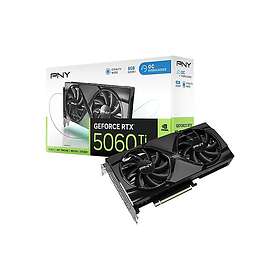


Pros
Ultra-fast GDDR7 memory at 28 Gbit/s
Dedicated Nvidia CUDA and AI acceleration
Modest 550 W power requirement
Supports up to 4 monitors
Cons
8GB VRAM capacity is modest for 1440p
Narrow 128-bit memory interface
Uses 8 PCIe channels instead of 16
The Gigabyte GeForce RTX 5070 WINDFORCE OC SFF combines 12GB of fast GDDR7 memory with a compact two-slot form factor suited for small-form-factor builds. It delivers robust ray tracing performance, DLSS capabilities, and CUDA acceleration across a 192-bit memory interface. It connects up to four displays and requires a 650 W power supply.
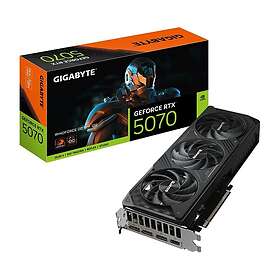
Pros
12GB high-speed GDDR7 memory
Slim 2-slot design fits smaller builds
Nvidia CUDA and ray tracing support
Supports up to 4 monitors
Cons
Heavy card weight at 2 kg
Requires 650 W power supply
Lower VRAM capacity than 16GB rivals
Compare specifications
| Chipset Manufacturer | AMD Radeon | AMD Radeon | AMD Radeon | NVIDIA GeForce | NVIDIA GeForce |
|---|---|---|---|---|---|
| GPU | AMD Radeon RX 9070 XT | AMD Radeo RX 9060 XT | AMD Radeon RX 9070 XT | NVIDIA GeForce RTX 5060 | NVIDIA GeForce RTX 5070 |
| Optimised for | Gaming | Gaming | Gaming | Gaming, AI & Machine Learning | Gaming, AI & Machine Learning |
| Memory type | GDDR6 | GDDR6 | GDDR6 | GDDR7 | GDDR7 |
| Memory capacity | 16GB | 16GB | 16GB | 8GB | 12GB |
How we create the list
The ranking is updated monthly and is based on data we collect from our own platform. Products that rank highly are popular among our users while also maintaining high quality according to editorial expert assessments. Specifically, we weigh how many users follow the product via price alerts or lists, how it is rated by experts and users, as well as how much traffic it generates to stores and how well it is represented in retail. The texts on this page are AI-generated and created to give you a quick and clear overview. No products are paid placements – the ranking is driven solely by data.