Best Keyboards October 2026
Compare top-rated musical keyboards to find the ideal match for your skill level, space, and musical style. This independently ranked guide highlights key features, pros, and trade-offs across portable mini keyboards and full-size practice models.
Last updated: 6 October 2026

Keyboards: Top 5
1
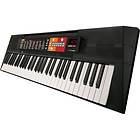
Yamaha PSR-F51
from £9.951 store
from £9.95
1 store
2

Yamaha PSS-A50
from £67.609 stores
from £67.60
9 stores
3
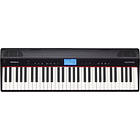
Roland GO:PIANO 61
from £249.001 store
from £249.00
1 store
4
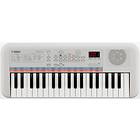
Yamaha Remie PSS-E30
from £56.005 stores
from £56.00
5 stores
5
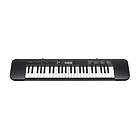
Casio Standard CTK-240
from £69.003 stores
from £69.00
3 stores
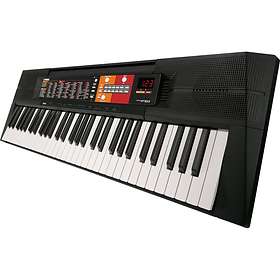
The Yamaha PSR-F51 is an entry-level keyboard featuring 61 full-sized synth keys and a lightweight 3.4 kg chassis. It includes 120 voices, 114 accompaniment styles, and a built-in metronome for structured practice. You can power it with standard AA batteries or the included AC adapter.

Pros
Full 61-key layout
120 built-in instrument voices
114 accompaniment styles
Runs on AA batteries or mains power
Cons
No USB connectivity
Lacks touch sensitivity
No sustain pedal input
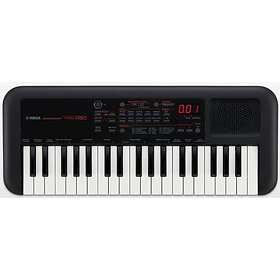
The Yamaha PSS-A50 is a compact 37-key keyboard tailored for creative musicians and mobile producers. Despite its compact footprint, it delivers touch-sensitive velocity response, a built-in arpeggiator, and a phrase recorder. USB connectivity makes it simple to integrate into digital audio workstations.


Pros
Touch-sensitive mini keys
Built-in arpeggiator and sequencer
MIDI over USB support
Ultra-lightweight at 1.2 kg
Cons
Only 37 mini keys
Limited built-in sound selection (42)
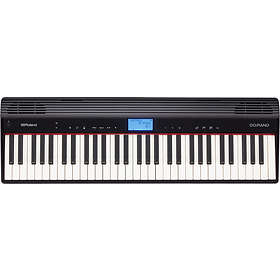
The Roland GO:PIANO 61 is built for players who want realistic piano response in a portable format. It features 61 touch-sensitive keys with 128-note polyphony, ensuring notes ring out naturally during complex passages. The unit also includes an onboard recorder, a sustain pedal jack, and an auxiliary audio input.
Pros
High 128-note polyphony
Piano-style touch-sensitive keys
Sustain pedal input included
Aux audio input for external players
Cons
Heaviest keyboard on the list (3.9 kg)
Fewer preset sounds (40 voices)
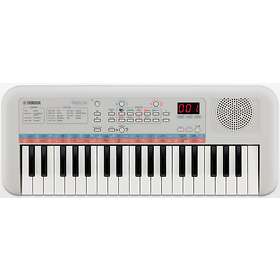
The Yamaha Remie PSS-E30 is an entry-level mini keyboard tailored for young children and early musical discovery. It offers 74 fun instrument voices, 28 auto-accompaniment styles, and 30 preset songs to keep kids engaged. Its lightweight frame and dual power options make it simple to take on trips.
Pros
Lightweight and compact design (1.2 kg)
74 built-in instrument sounds
USB power compatible
Child-friendly mini-key format
Cons
Keys lack touch sensitivity
No internal recording function
Limited to 37 mini keys
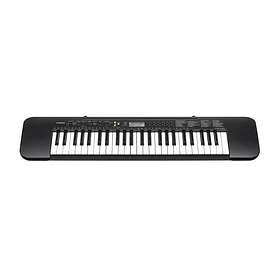
The Casio Standard CTK-240 is a four-octave keyboard equipped with 49 standard-size keys and a central monochrome screen. It comes loaded with 100 tones, 100 accompaniment rhythms, and 50 practice songs for guided learning. Weighing 2.8 kg, it balances portable dimensions with full-width keyboard practice.

Pros
Mid-size 49-key layout
100 built-in tones and rhythms
50 practice demo songs
Clear monochrome display
Cons
Low polyphony (12 notes)
Keys are not velocity sensitive
No USB or MIDI connectivity
Compare specifications
| Number of keys | 61 keys | 37 keys | 61 keys | 37 keys | 49 keys |
|---|---|---|---|---|---|
| Keyboard functinos | Split, Back-lit keys | Touch sensitivity, Back-lit keys | Touch sensitivity | Back-lit keys | — |
| Number of octaves | — | — | 5 | — | 4 |
How we create the list
The ranking is updated monthly and is based on data we collect from our own platform. Products that rank highly are popular among our users while also maintaining high quality according to editorial expert assessments. Specifically, we weigh how many users follow the product via price alerts or lists, how it is rated by experts and users, as well as how much traffic it generates to stores and how well it is represented in retail. The texts on this page are AI-generated and created to give you a quick and clear overview. No products are paid placements – the ranking is driven solely by data.