Best Single-board Computers November 2026
Compare top single-board computers side by side to find the right board for your next DIY build or server project. This independent guide highlights key specifications, performance differences, and practical pros and cons across leading options.
Last updated: 1 November 2026
The list is unchanged since the last update.

Single-board Computers (SBC): Top 5
1
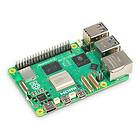
Raspberry Pi 5 Board 2400 5B RPI5 SC1112 2K
from £168.003 stores
from £168.00
3 stores
2
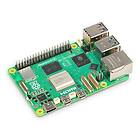
Raspberry Pi - LPDDR4 4K BCM2712
from £81.994 stores
from £81.99
4 stores
3
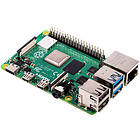
Raspberry Pi 4 Model B 4GB
from £148.233 stores
from £148.23
3 stores
4
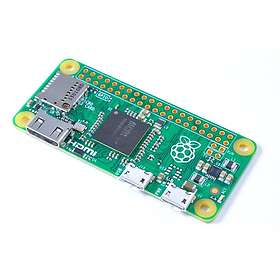
Raspberry Pi Zero 2 W 2W W/ZERO/JETSON SC1176
5
Raspberry Pi 3 Model 5G
from £49.994 stores
from £49.99
4 stores
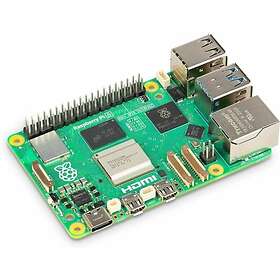
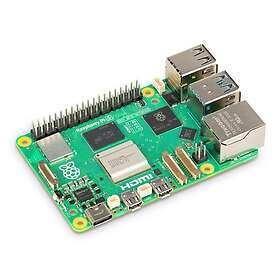
The Raspberry Pi 5 8GB delivers top-tier performance in the lineup with its 2.4 GHz quad-core processor and generous memory. It features Gigabit Ethernet, dual micro-HDMI ports, and fast USB 3.0 connections for demanding multitasking. This board suits home servers, desktop computing, and resource-heavy maker projects.

£168.00
Unknown stock
Pros
Spacious 8 GB LPDDR4x RAM
Fast 2.4 GHz quad-core processor
Dual micro-HDMI outputs
Gigabit Ethernet and USB 3.0
Cons
No 3.5 mm headphone jack
Requires micro-HDMI cables
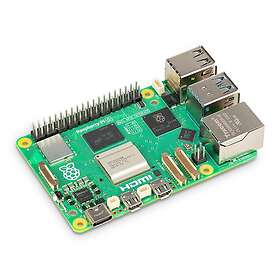
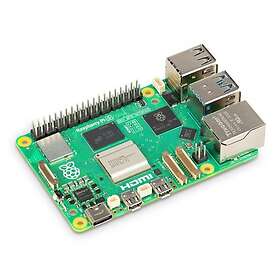
The Raspberry Pi 5 4GB offers the same snappy 2.4 GHz quad-core processing power as its higher-memory sibling at a lower price tier. It includes dual display outputs, Gigabit networking, and fast USB ports for modern project setups. It is a solid pick for media streaming, light desktop tasks, and hobby electronics.

£133.00
In stock

£168.41
In stock

£169.42
In stock
Pros
Fast 2.4 GHz quad-core processor
Dual micro-HDMI outputs
Gigabit Ethernet and USB 3.0
Integrated Wi-Fi 5 and Bluetooth 5.0
Cons
Less memory headroom than the 8 GB model
No analogue headphone output
Requires micro-HDMI adapters
The Raspberry Pi 4 Model B 4GB remains a versatile classic equipped with a 1.5 GHz quad-core processor and a handy 3.5 mm analogue audio jack. It supports dual 4K video outputs, Gigabit Ethernet, and USB 3.0 file transfers. It works well for home automation hubs, network storage, and educational coding.
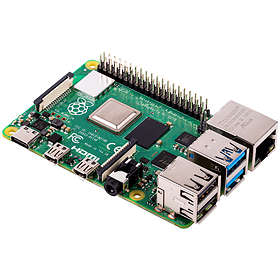
Pros
Includes a 3.5 mm headphone output
Gigabit Ethernet and dual USB 3.0 ports
Dual micro-HDMI video outputs
Reliable community software support
Cons
Slower 1.5 GHz processor than Pi 5
Runs hot under sustained heavy load
Requires micro-HDMI cables
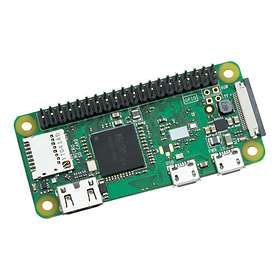
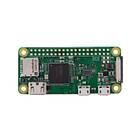
The Raspberry Pi Zero 2W packs wireless networking into an ultra-small form factor measuring just 65 by 30 mm. With its 1.0 GHz processor and mini-HDMI port, it provides essential computing in tight enclosures. It is purpose-built for smart sensors, portable gadgets, and minimalist IoT devices.
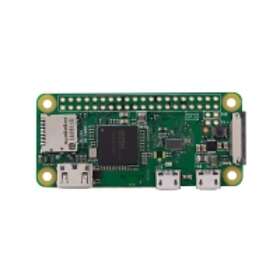
Pros
Tiny 65 by 30 mm footprint
Built-in Wi-Fi and Bluetooth
Low power draw for compact projects
Cons
Only 512 MB of RAM
No Ethernet port
Single micro-USB data port
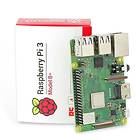
The Raspberry Pi 3 Model B+ is an established development board featuring a 1.4 GHz quad-core processor and a full-size HDMI port. It retains legacy-friendly connectivity with an integrated audio jack and four USB 2.0 ports. It serves as a straightforward option for retro arcade emulation and introductory programming projects.
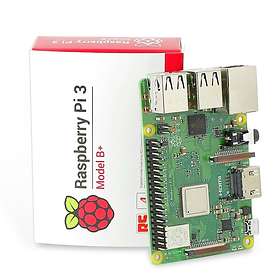
Pros
Full-sized standard HDMI port
Includes a 3.5 mm headphone output
Four onboard USB ports
Cons
Limited to 1 GB of DDR2 RAM
Ethernet speed capped at 300 Mbps
No fast USB 3.0 ports
Compare specifications
| RAM size | 8 GB | 4 GB | 4 GB | 0.5 GB | 1 GB |
|---|---|---|---|---|---|
| Processor core type | 4-core (Quad) | 4-core (Quad) | 4-core (Quad) | 1 (Single) Core | 4-core (Quad) |
How we create the list
The ranking is updated monthly and is based on data we collect from our own platform. Products that rank highly are popular among our users while also maintaining high quality according to editorial expert assessments. Specifically, we weigh how many users follow the product via price alerts or lists, how it is rated by experts and users, as well as how much traffic it generates to stores and how well it is represented in retail. The texts on this page are AI-generated and created to give you a quick and clear overview. No products are paid placements – the ranking is driven solely by data.