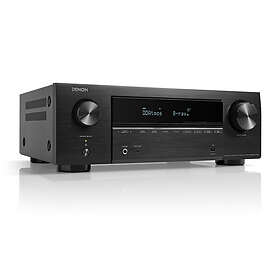
Best Amplifiers November 2026
Compare the best amplifiers to find the right fit for your home cinema or stereo setup. Our independent ranking highlights top-rated models alongside their key specifications, strengths, and drawbacks.
Last updated: 1 November 2026
The list is unchanged since the last update.

Amplifiers: Top 5
1
Marantz Cinema 50
from £1,499.002 stores
from £1,499.00
2 stores
2
WiiM AMP Ultra
from £499.006 stores
from £499.00
6 stores
3
Marantz Cinema 70s
from £699.003 stores
from £699.00
3 stores
4
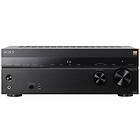
Sony TA-AN1000
from £648.999 stores
from £648.99
9 stores
5
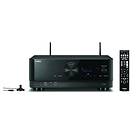
Yamaha RX-V6A
from £599.003 stores
from £599.00
3 stores
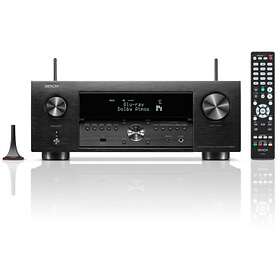
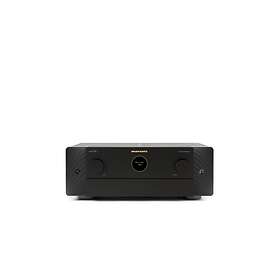
The Marantz Cinema 50 is an 11.1-channel AV receiver built for dedicated home cinema systems. It delivers 110 W per channel in stereo and supports 8K video, Dolby Atmos, and DTS:X. With HEOS streaming, multi-zone playback, and room calibration, it manages complex multi-speaker setups with ease.

Pros
9 amplifier channels with 11.1 processing
Supports up to 4 subwoofers
6 HDMI inputs and 3 HDMI outputs
Includes microphone room calibration
Cons
Heavy chassis at 13.5 kg
Higher power consumption up to 680 W
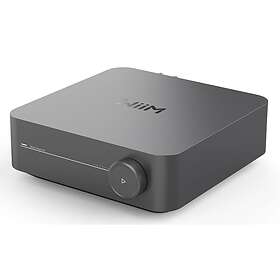
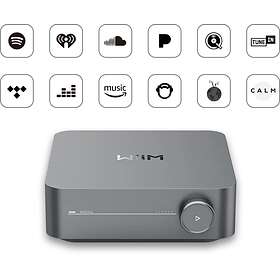
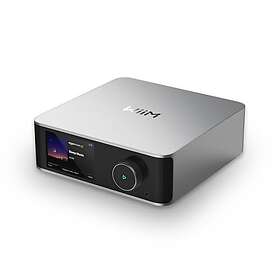
The WiiM AMP Ultra is a compact Class D stereo streaming amplifier designed for modern two-channel setups. It delivers 100 W per channel at 8 ohms and features a high-resolution 32-bit/384 kHz DAC. Extensive streaming standards like AirPlay, Google Cast, and Spotify Connect are built right in.


Pros
Compact size and light 2.45 kg build
Delivers 100 W per channel at 8 ohms
Modern Wi-Fi 6 connectivity
Extensive multi-service streaming support
Cons
No dedicated phono input
Only 2 channels of amplification
No multi-zone audio support
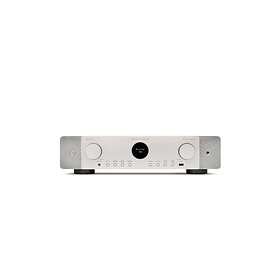
The Marantz Cinema 70s offers complete home cinema capabilities in a low-profile chassis that fits into tight media cabinets. It features 7 built-in amplifier channels, 8K video support, and Dolby Atmos processing. You also get full pre-outs to connect external power amplifiers whenever you need extra drive.
Pros
Slim profile at only 109 mm high
Supports 7.2-channel surround sound
6 HDMI inputs with 8K passthrough
Dedicated phono input for turntables
Cons
Lower power output at 50 W per channel
Only 1 HDMI output
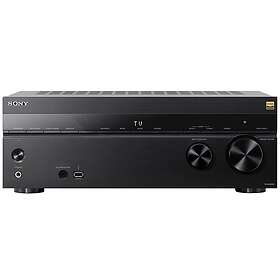
The Sony TA-AN1000 is a versatile 7.2-channel AV receiver delivering a robust 165 W per channel. It features HDMI 2.1 connectivity with 8K support, making it an excellent match for next-generation consoles and modern home theaters. Built-in Chromecast, AirPlay, and 360 Spatial Sound Mapping round out its multimedia capabilities.

Pros
High power output of 165 W per channel
Supports 7.2 channels with Dolby Atmos
Dual HDMI outputs with 8K passthrough
Includes auto-calibration microphone
Cons
No dedicated phono input
No full-range pre-outputs
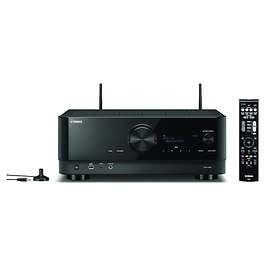
The Yamaha RX-V6A is a 7.2-channel AV receiver that brings immersive Dolby Atmos and DTS:X audio to your living room. It offers 7 HDMI inputs, 100 W per channel, and MusicCast multi-room audio streaming. Yamaha's YPAO sound optimization automatically tunes the output to match your room's acoustics.

Pros
7 HDMI inputs for multiple sources
Front-channel pre-outs for power amps
Includes FM, AM, and DAB+ radio tuners
High-resolution 32-bit/384 kHz DAC
Cons
Only 1 HDMI output
Pre-outs are limited to the front channels
Compare specifications
| Type | AV Receiver | Streaming Amplifier | AV Receiver | AV Receiver | AV Receiver |
|---|---|---|---|---|---|
| Number of channels | 11.1 | 2 | 7.1 | 7.1 | 2 |
| Connectors | Ethernet, USB, HDMI, 3.5 mm input, RCA input, RCA output, Coaxial input, Optical input, Phono input, Pre-out, Subwoofer output | Ethernet, USB, HDMI, RCA input, Optical input, Subwoofer output | Ethernet, USB, HDMI, RCA input, RCA output, Coaxial input, Optical input, Phono input, Pre-out, Subwoofer output | Ethernet, USB, HDMI, RCA input, Coaxial input, Optical input, Headphone output | Ethernet, USB, HDMI, RCA input, Coaxial input, Optical input, Phono input, Pre-out |
| Features | Bluetooth, Support for internet radio, Remote control, Built-in Wi-Fi, App control, Multi zone (audio/video multiple rooms), Bi-amping | Bluetooth, Support for internet radio, Remote control, Display, Built-in Wi-Fi, App control, Built-in D/A Converter, Programmable Remote Control | Bluetooth, Support for internet radio, Remote control, Built-in Wi-Fi, App control, Multi zone (audio/video multiple rooms), Bi-amping | Bluetooth, Remote control, Multi zone (audio/video multiple rooms), Built-in D/A Converter, Bi-amping | Bluetooth, Support for internet radio, Remote control, Built-in Wi-Fi, App control, Multi zone (audio/video multiple rooms), Bi-amping |
| Streaming standards | Apple AirPlay, Spotify Connect, Tidal, Deezer, TuneIn, Apple AirPlay 2, Amazon Music, DLNA | Apple AirPlay, Spotify Connect, Google Cast/Chromecast, Tidal, Deezer, TuneIn, Amazon Music, DLNA | Apple AirPlay, Spotify Connect, Tidal, Deezer, TuneIn, Apple AirPlay 2, Amazon Music | Apple AirPlay, Google Cast/Chromecast | Apple AirPlay, Spotify Connect, Tidal, Deezer, MusicCast, Apple AirPlay 2, Amazon Music |
| RMS power, 8 ohm, 20Hz-20kHz (all) | — | 100 W | — | — | — |
How we create the list
The ranking is updated monthly and is based on data we collect from our own platform. Products that rank highly are popular among our users while also maintaining high quality according to editorial expert assessments. Specifically, we weigh how many users follow the product via price alerts or lists, how it is rated by experts and users, as well as how much traffic it generates to stores and how well it is represented in retail. The texts on this page are AI-generated and created to give you a quick and clear overview. No products are paid placements – the ranking is driven solely by data.